
The Laredo police station in south Texas and the Pentagon on the banks of the Potomac — separated by half the continent — hardly resemble each other in architectural style or governmental function. Yet they were the focus of late March court battles alleging retaliation against journalists for merely seeking and reporting news emanating from the two buildings.
By
An array of jurists from all levels of the federal judiciary — including a justice of the U.S. Supreme Court in the Laredo case — called out police and Defense Department personnel for punishing journalists for doing their jobs.
Justice Sonia Sotomayor decried the arrest of Laredo reporter Priscilla Villarreal “for doing something journalists do every day: posing questions to a public official.” Sotomayor dissented from the high court’s denial of Villarreal’s petition for review of actions by the Laredo police department. Judge James Ho declared in an earlier stage of the Laredo case that “It is not a crime to be a journalist.” His opinion on behalf of a three-judge panel was later overturned by the Fifth Circuit en banc.
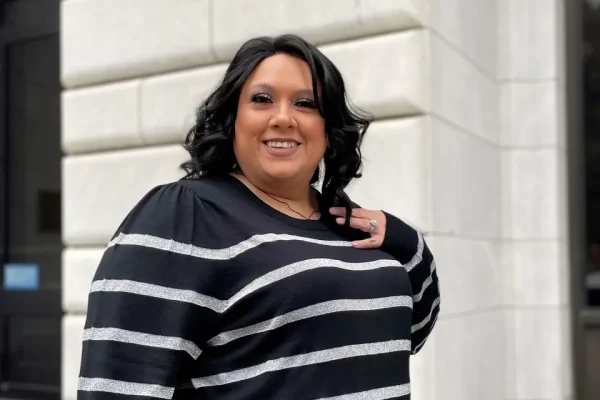
(Kevin McGill/AP)
In the Pentagon case, U.S. District Judge Paul Friedman vacated a policy that allowed the expulsion of reporters from the building for every day “essential journalistic practices” such as “asking questions of Department [of Defense] employees.”
Friedman’s March 20 ruling found that journalists could lose their press badges for soliciting information — classified or unclassified — that the Pentagon had not authorized for release. Dozens of accredited news organizations — from The New York Times and CNN to Fox News and Newsmax — refused to sign on to the new policy and walked out.
On Thursday, Judge Friedman rejected the department’s second attempt to impose unprecedented restrictions on journalist’s access to the building, noting that the role of the press is even more important to our Constitutional structure during a time of war.
When the Times sued, Judge Friedman held that the policy’s “true purpose and practical effect” was “to weed out disfavored journalists,” those “not on board and willing to serve” the commander in chief. He labeled the newly enacted regulations “viewpoint discrimination, full stop.” The policy vested Pentagon officials with “unbridled discretion” amounting to government censorship of the defense department press corps.
Friedman noted that the policy was implemented after senior department officials repeatedly condemned reporting by the Times and other news organizations. Defense Department officials’ critique of the press included disparaging comments over coverage of the infamous Signalgate incident. That occasion involved Defense Secretary Pete Hegseth’s alleged misuse of an online messaging platform resulting in disclosure of American plans for bombing operations in Yemen. Freidman found that the revised guidelines marked a “sea change” from decades when no reporter was stripped of credentials, not even after the Times and The Washington Post during the Nixon administration published classified information contained in the Pentagon Papers.
Three days after Freidman’s ruling, Sotomayor issued a rare dissent in writing from the court’s denial of certiorari in Villarreal v. Alaniz. The denial foreclosed high court review of the Fifth Circuit’s en banc decision granting qualified immunity to Laredo police officers who arrested a citizen journalist. The parallels in the Laredo case to the Pentagon matter are striking, both involving punishing reporters for what journalists do — asking government officials questions about life and death matters.
In 2017, Priscilla Villarreal — a Laredo citizen journalist known as “La Gordiloca” — was arrested under a never-before-enforced Texas statute. Her alleged crime consisted of fact-checking her reporting with a Laredo police detective, once regarding the suicide of a border patrol officer and another time concerning a fatal car wreck. The officer voluntarily answered Villarreal’s questions confirming information the reporter already had from public sources. Her later arrest, Villarreal alleged, was the culmination of a months-long campaign by local officials who disliked her reporting and were “plotting her takedown.”
A three-judge panel of the Fifth Circuit reversed the district court’s grant of qualified immunity to Laredo police. “If the First Amendment means anything, it surely means that a citizen journalist has the right to ask a public official a question, without fear of being imprisoned,” Judge Ho wrote. But the full Fifth Circuit reversed that panel 9-7.
Judge Ho — one of the most conservative members of the Fifth Circuit — issued a vigorous dissent from the en banc decision that presaged later findings in the Pentagon case. “If any principle of constitutional law ought to unite all of us as Americans, it’s that the government has no business imprisoning citizens for the views they hold or the questions they ask.” Ho warned that the Fifth Circuit majority’s reasoning offers “a roadmap for destroying the First Amendment.”
Sotomayor laid out similar concerns. She wrote, “No reasonable officer would have thought that he could have arrested Villarreal, consistent with the Constitution, for asking the questions she asked.” The arrest “flies in the face of the core guarantee of the First Amendment.” It transformed everyday journalism into a crime. Tolerating retaliation against journalists threatens to silence “one of the very agencies the Framers of our Constitution thoughtfully and deliberately selected to improve our society and keep it free.”
The Department of Defense has vowed to appeal Freidman’s rulings. Journalists and First Amendment advocates are watching to see if the case ultimately reaches the Supreme Court. If so, Justice Sotomayor will have the opportunity to assemble a majority behind her view of the First Amendment guarantee of freedom of the press.
Dallas attorney Paul Watler represented a coalition of national and state news organizations in friend-of-court briefs in the Fifth Circuit and U.S. Supreme Court in the Laredo case. He is a partner in the litigation section of Jackson Walker LLP in Dallas. He focuses his practice on complex commercial, media and Internet litigation. He also serves as a board member of Friends of The Daily Texan, Inc.