
Oscar O’Neal Griffin Jr. started his career with a journalism degree from the University of Texas, where he was a copyreader at The Daily Texan.
But a few short years later he broke open a massive scandal in West Texas, winning the Pulitzer Prize in 1963.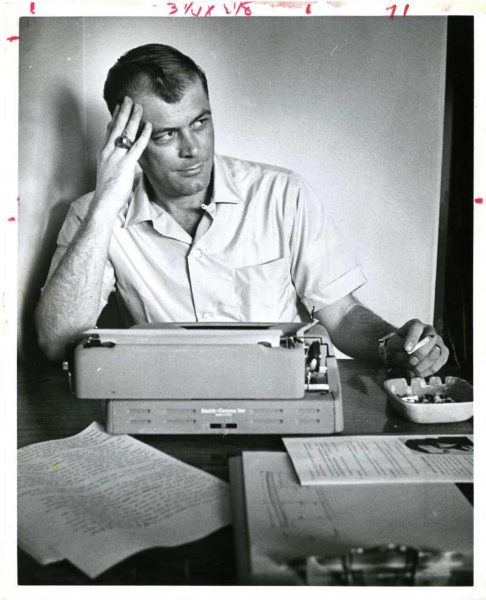
Griffin won the 1963 Pulitzer Prize for Local Reporting as editor at the Independent and Enterprise, for directing its investigation of the fraud scandal involving Billie Sol Estates in 1962.
Griffin was born in Daisetta, Texas and obtained his degree from the UT in 1958.
Griffin won the Pulitzer while he was the editor of the Pecos Independent and Enterprise. During his time here, he was a reporter and editor. Prior to that time, he served in the Army in the 1950s. After graduating from the UT he worked at a number of small newspapers before his stint at the Independent and Enterprise.
After finishing his degree, Griffin worked at several small newspapers before becoming editor (and de facto reporter) at the weekly/semiweekly paper Pecos Independent and Enterprise in Pecos, Texas.
Over the course of the series, Griffin exposed how the “fertilizer tanks” used as collateral often didn’t exist — and how Estes had been using the same tanks, serial numbers and paperwork repeatedly to secure more and more loans, exploiting the inability of lenders to physically verify them.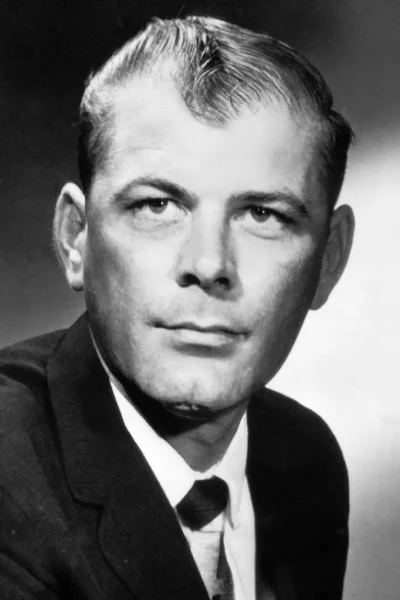
The articles triggered widespread attention: federal investigators, banks, and the FBI descended on Pecos; broader scrutiny was applied to Estes’s operations, his land and cotton-subsidy schemes, and his political connections.
Ten days after the final article (March 1962), Estes was arrested by the FBI.
Thus, what began as small-town newspaper reporting became a national scandal — the fraudulent empire of a major wheeler-dealer collapsed, triggering prosecutions and sweeping consequences.
For this remarkable reporting, Griffin won the 1963 Pulitzer Prize for Local Reporting. The Pulitzer committee cited him “for initiating exposure of the Billie Sol Estes scandal and thereby bringing a major fraud on the United States government to national attention with resultant investigation, prosecution and conviction of Estes.”
Griffin’s work is often held up as a classic example of small-town investigative journalism that triggered national consequences — showing that even a modest local paper can uncover corruption affecting the federal government.
His reporting helped bring down a massive fraud scheme that had exploited government programs and deceived banks, investors and farmers.
The scandal surrounding Billie Sol Estes ultimately prompted broader scrutiny of agricultural subsidies, loan practices, and related political corruption — illustrating how journalism can enforce accountability even in powerful economic and political arenas.
Griffin’s Pulitzer win in 1963 stands as a testament to the power of careful, determined reporting, especially in a time when verification was harder (no internet, no digital databases).
————————-
Register to attend at: